
The best of Bhutan
The best of Bhutan
Paro-Thimpu-Punakha
Day 01
Arrival in Paro / Transfer to Thimphu
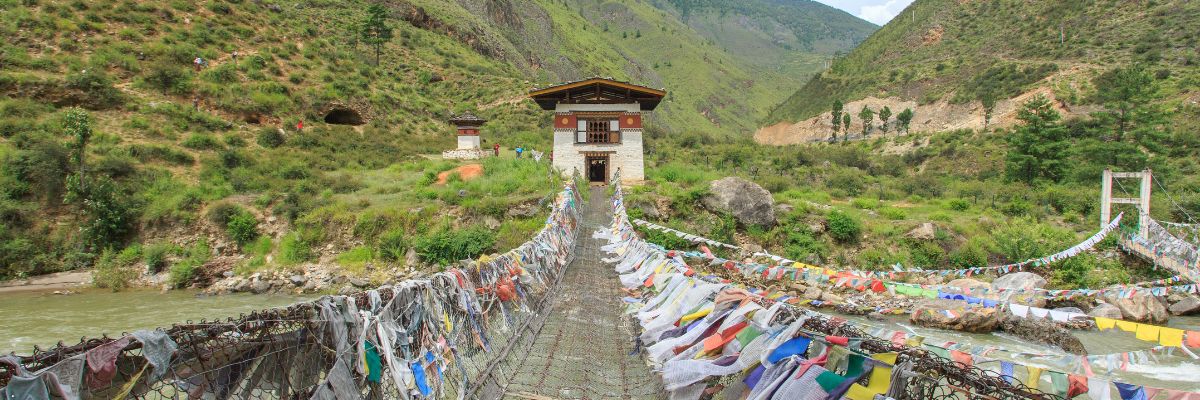
The flight to Paro, Bhutan, is renowned for its breathtaking views of the Himalayan mountain range. Departing from Kathmandu, Nepal, the journey offers passengers a captivating experience with mesmerizing vistas before an exciting descent into the Kingdom of Bhutan. Upon disembarking, Bhutan welcomes you with fresh mountain air, a truly refreshing introduction to the country. After completing immigration formalities, one of our guides will greet you with a traditional gesture called “Tashi Khaddar,” which involves presenting a white scarf. This auspicious offering signifies a warm and respectful welcome. Following the ceremony, a vehicle will transfer you to Thimphu, the capital of Bhutan. The drive to the capital is stunning, taking you through the picturesque Paro Valley and passing the temple dedicated to the 13th-century saint Thangthong Gyalpo, famous for his bridge-building skills. Upon arrival in Thimphu, you will check into your hotel. Thimphu, the capital of Bhutan, serves as the country’s political, religious, and commercial center. The city boasts a unique blend of modern development and ancient traditions. While it may not conform to conventional expectations of a capital city, Thimphu exudes a vibrant atmosphere and maintains a strong national character, evident in its architectural style. After lunch, you will visit Buddha Point, known locally as Kuensel Phodrang. This site is home to the largest Buddha statue in Bhutan. You may offer your respects and prayers. Afterward, we will take a leisurely stroll around the area. The location of Buddha Point also offers splendid panoramic views of the Thimphu Valley to the west, leading to the confluence of the Paro and Thimphu rivers at Chuzom. During the journey, you will have the opportunity to visit Tamchog Lhakhang. To reach the temple, you must cross an iron bridge built in the 15th century by Thangthong Gyalpo. They say that while the Tibetan master meditated here, he had a vision of an emanation of Avalokiteshvara and decided to build a temple and an iron suspension bridge on this spot—one of the few he ever constructed. Immerse yourselves in the beauty, culture, and spirituality of Bhutan as you begin your exploration of this extraordinary country. (Additional cost) – In the evening, before dinner, we will offer you the opportunity to attend a lecture on a chosen topic, such as Buddhism and its philosophy, national happiness, or a general introduction to Bhutan and its people, etc., given by one of our scholars, an expert on these subjects. Overnight in Thimphu.
Day 02
In Thimphu
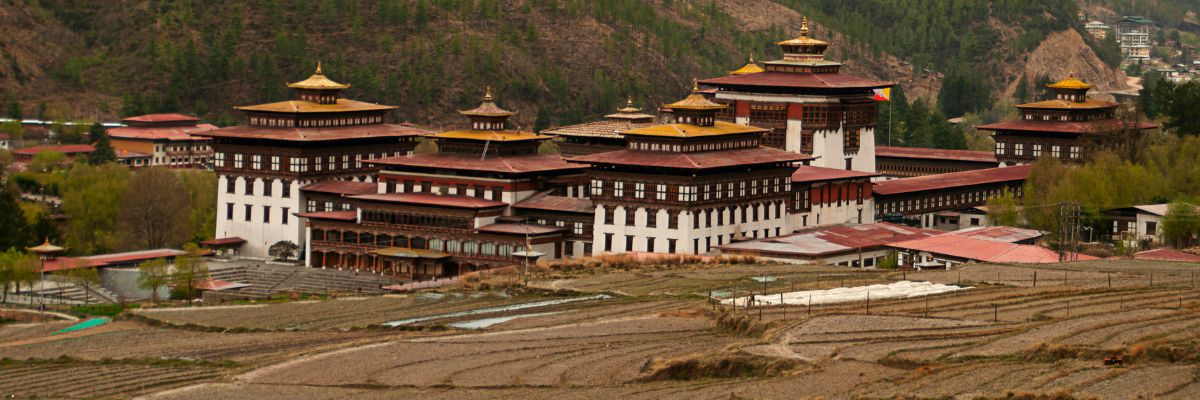
(Additional cost). Early in the morning, we will take a short trip to the northern edge of the city, high on a hill, to participate in the Tshewang ceremony at the 12th-century Changangkha Lhakhang temple and monastic school perched on a ridge above Thimphu, south of Motithang. This ceremony consists of a special prayer held at the monastery for peace, prosperity, and good health by a group of monks. Guests have the opportunity to participate by lighting an oil lamp on the monastery altar. Later, we will visit the Takin Reserve. The Takin is Bhutan’s national animal, said to be a cross between a cow and a goat. Adult males are called bulls, females cows, and young calves. One interesting feature of this unique animal is how it manages to stay warm in the frigid mountain environment. Its large snout has a complex network of sinus cavities to warm the air before it reaches its lungs. Legend says that the takin was created by the great Buddhist yogi, Drupa Kunley, and can only be found in Bhutan and surrounding areas. Taxonomists classify the animal in its own category, as it is not similar enough to any other to fit into established categories. After the visit, we will return to the hotel for breakfast. After lunch, we will take a short city tour, visiting the Textile Museum, a national art form that is still alive today. This museum showcases the main techniques of weaving, local clothing styles, and textiles made by both women and men. Afterward, we will visit the Simply Bhutan Museum. The building is constructed using repurposed wood, window and door frames, and other elements from demolished traditional houses, representing the old Bhutanese architecture that is being lost due to modernization. The uniqueness of the structure lies in the composition of the materials used. It’s also an interactive museum, where, unlike other museums, you’re allowed to take photos and touch objects. But that’s not all; you’ll have the opportunity to try on Bhutanese national dress, called “gho” for men and “kira” for women. The best part is the representation of the traditional lifestyles of the Bhutanese people. Afterward, we’ll visit the King’s Memorial Chorten. You’ll see that it’s constantly being circumambulated by people murmuring mantras and turning their prayer wheels. The construction of this landmark, a monument to peace and world prosperity, was the wish of Bhutan’s third king, His Majesty Jigme Dorji Wangchuk, “the father of modern Bhutan.” It was completed in 1974 after his untimely death and serves as a memorial to the late king and to peace. We’ll then take the car to the hill where Trashichhoedzong, an impressive monastery-fortress, is located. This complex houses the State Secretariat.The throne room of His Majesty and several government offices are located within it. It is known as the “fortress of the glorious religion.” It is also the center of the Shabdrung Ngawang Namgyal and was rebuilt in the 1960s in the traditional Bhutanese style, without nails or architectural plans.
Day 03
Thimphu/Punakha
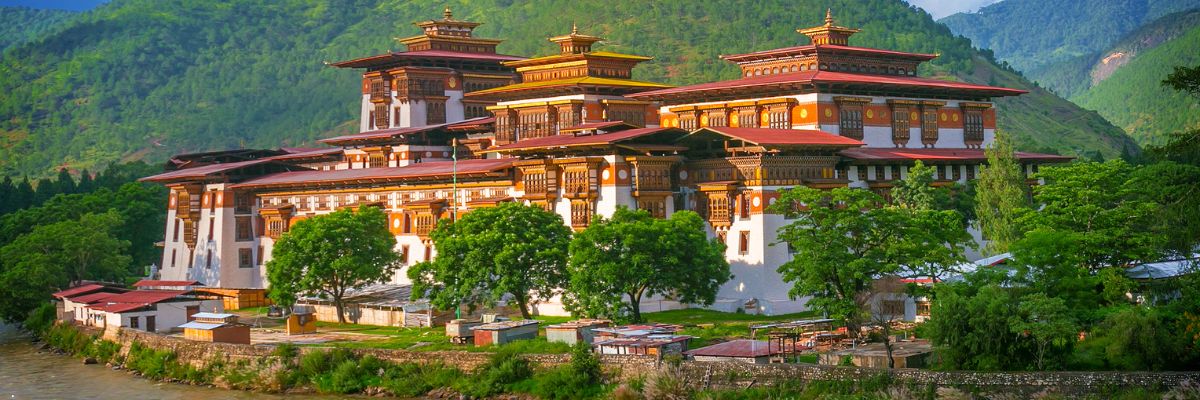
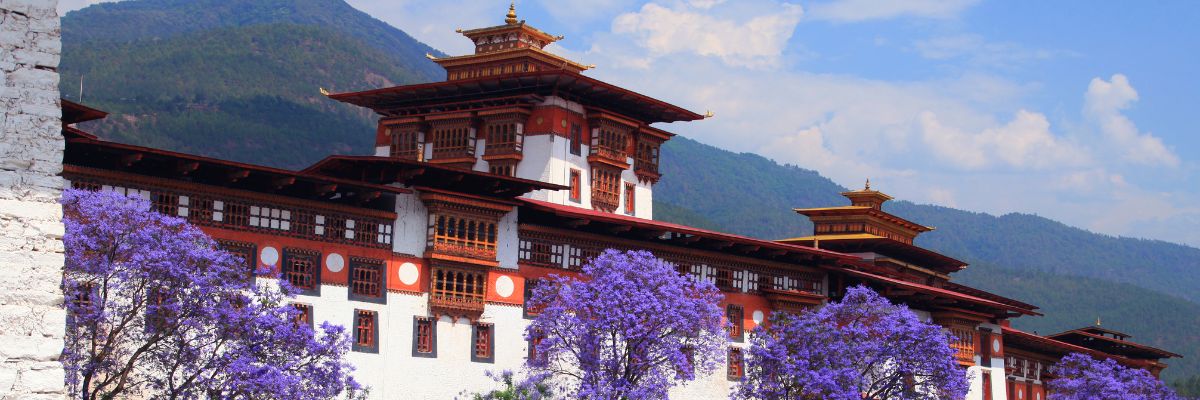
After breakfast at the hotel, we will depart for Punakha via the Dochula Pass (3,080m). In Bhutan, mountain passes are marked by a large Bhutanese chorten and a prayer flag. The Dochula Pass offers breathtaking views of the towering peaks of the eastern Himalayas, weather permitting. Bhutan’s capital, Thimphu, boasts ancient monasteries and the iconic Tashichho Dzong fortress, which houses the government and royal offices, the monarch’s throne room, and the seat of the Je Khenpo, or Chief Abbot. Tashichho Dzong was founded in 1261 by Lama Gyalwa Lhanangpa, a religious master renowned for his teachings. The monastery was built atop a hill and was originally called Do-Ngon Dzong, or “Blue Stone Dzong.” In 1641, it was renamed Tashichho Dzong, meaning “Fortress of the Glorious Religion,” and was rebuilt that same year by Shabdrung Ngawang Namgyal, the political and religious unifier of Bhutan and a key figure in its history, after suffering several fires and earthquakes. After checking into the hotel, you can explore both options and make contact. > Overnight in Punakha. Punakha was the capital of Bhutan until 1955. Punakha Dzong, known as the “Palace of Happiness,” is a structure built without a single nail in just one year. It is located at the confluence of two rivers, the Mo Chu (meaning mother) and the Pho Chu (meaning father). Later, we will take an excursion to Chimi Lhakhang, a 15-minute drive away, from where we will begin a 1.5-hour hike through rice paddies and villages. The path leads through rice paddies to the small settlement of Pana, which means “field.” A stroll through the village, near the temple, will give you a glimpse into the villagers’ way of life. We will then arrive at El Chimi Lhakhang, situated on a hill in the center of the valley, also known as the fertility temple. It is a pilgrimage site for couples hoping to have children, as they believe that receiving the Lama’s blessing will increase their chances of conceiving.
Day 04
Punakha/Paro
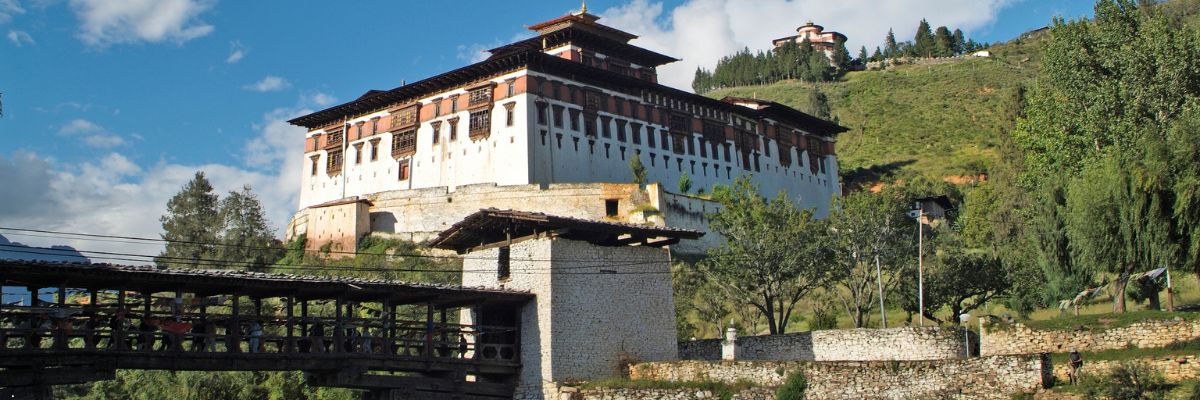
After breakfast, we will depart from the hotel and travel to Paro along a scenic road, admiring the landscape along the way. We will visit Simtokha Dzong, the oldest fortress in the country, built in 1627, which now houses the School of Buddhist Studies. Upon arrival in Paro, we will check into our hotel. After lunch, we will visit Ta Dzong, originally built as a watchtower, which now houses the National Museum. The extensive collection includes ancient Thangkha paintings, textiles, weapons and armor, household objects, and a rich array of natural and historical artifacts. Next, we will take a short walk along the path to visit Rinpung Dzong (Paro Dzong), meaning “Fortress in a Heap of Jewels,” which has a long and fascinating history. The wooden galleries lining the inner courtyard offer a glimpse into its history and culture, showcasing the Bhutanese people’s mastery of architecture and construction. In the evening, enjoy a traditional hot stone herbal bath at the lodge (additional cost). The traditional Bhutanese hot stone bath, known as Dotsho in the local language, has been practiced in Bhutan for centuries as a medicinal bath. Many Bhutanese believe it helps cure joint pain and other medical problems, as well as providing deep relaxation. River stones are heated and placed in the water to raise its temperature; sometimes medicinal herbs are added before the water is ready for bathing. Overnight in Paro.
Day 05
Unemployed
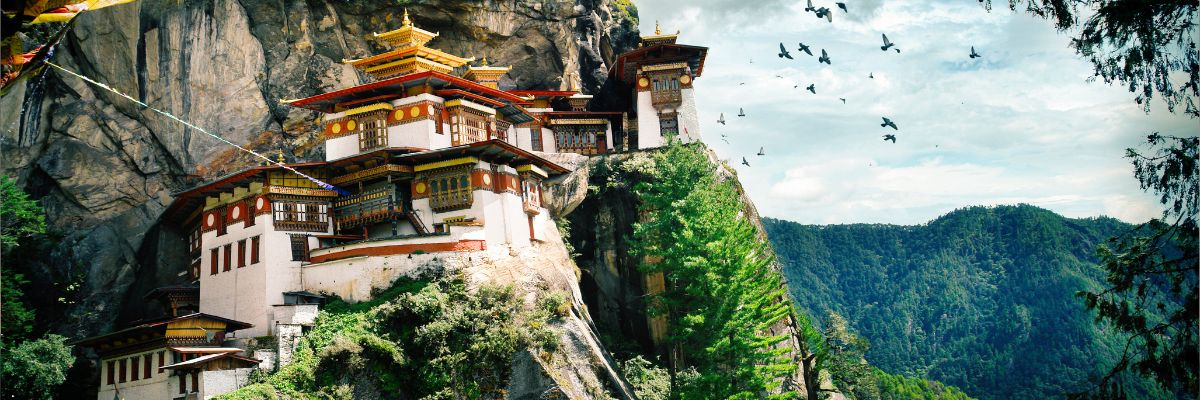
After breakfast, we’ll take an excursion to Taktshang Monastery, also known as the Tiger’s Nest (approximately 5 hours on foot). This is one of Bhutan’s most famous monasteries, perched on a cliffside 900 meters above the Paro Valley. Legend says that Guru Rinpoche arrived here riding a tigress and meditated in this monastery, hence its name, “Tiger’s Nest.” This site has been recognized as the most sacred and was visited by Shabdrung Ngawang Namgyal in 1646, and today, Bhutanese people make a pilgrimage to it at least once in their lifetime. On April 19, 1998, a fire severely damaged the main structure of the building, but this Bhutanese gem has now been restored to its former glory. In the afternoon, we’ll travel to Drukgyel Dzong, a ruined fortress where Bhutanese warriors fought against Tibetan invaders centuries ago. The snow-capped dome of sacred Chomolhari, “Goddess Mountain,” can be seen in all its glory from the access road to the Dzong. Later, we will visit Kyichu Lhakhang, one of the 108 temples built in the Himalayas by the Tibetan king, Songtsen Gampo, dating back to the 7th century. The construction of this temple marks the introduction of Buddhism to Bhutan. Overnight in Paro.
Day 06
Exit Unemployment
After an early breakfast, we’ll head to the airport for your return flight. Our representative will assist you with check-in. We hope this trip has captivated you and that you take away not only your purchases but also a lasting memory of this country, both in your mind and heart. Remember, this is the best souvenir we can take home when we travel. Thank you for choosing Destined Voyages and allowing us to be part of this unforgettable journey as you discover the Indian subcontinent. But this is just the beginning of an endless adventure. India has so much more to offer, and we’re excited to continue exploring new places and discovering new wonders with you. We hope to see you soon. Until next time!
LIST OF HOTELS
MEDIUM REGIMEN (breakfast and dinner)
| CITY | HOTEL | NIGHTS |
|---|---|---|
| Thimphu | Le Meridian | 02 |
| Punakha | Thensa Boutique Resort | 01 |
| Arrest | Le Meridian | 02 |